
Norfolk wears its history quietly but proudly. Beneath its wide skies lie traces of more than a thousand years of stories — Saxon villages, Norman castles, medieval markets, and the grand estates of England’s aristocracy. Unlike some places where history feels locked behind glass, in Norfolk you can touch it, walk through it, and even stay overnight in it. From towering cathedrals to windswept ruins, this is a county where the past is woven into the landscape.
Norwich: A City of Stories
At the heart of it all sits Norwich, one of England’s most historic and characterful cities. It’s a place where cobbled streets twist between timber-framed buildings, and ancient churches nestle beside quirky cafés.
The jewel in its crown is Norwich Cathedral, whose elegant spire — the second tallest in England — has dominated the skyline since the 12th century. Step inside, and you’ll be struck by the hush of the vast nave, the intricate stone carvings, and the beautifully preserved cloisters. Don’t miss a wander through The Close, the peaceful green space surrounding the cathedral, where ivy climbs over old brick walls and time seems to slow down.
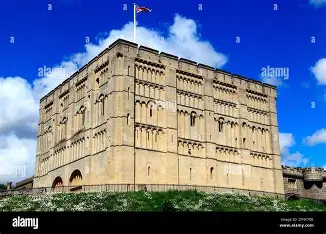
A short walk away, Norwich Castle stands proudly on its hill. Built by the Normans soon after the Conquest, it has served as a fortress, a royal palace, and even a prison. Today, it’s a fascinating museum filled with treasures from Norfolk’s past — from Saxon jewellery to fine art and archaeology. The rooftop offers panoramic views over the city, especially magical at sunset.
The Great Houses of Norfolk
Norfolk’s wealth in centuries past left behind some of England’s most beautiful stately homes, each with its own story.
Top of the list is Sandringham Estate, the royal family’s beloved country retreat. Built in the 19th century and still privately owned by the monarch, it’s open to visitors for much of the year. The house is elegant but homely, with displays of royal memorabilia and family photographs that make it feel surprisingly personal. The surrounding parkland is equally impressive — 8,000 hectares of woodland and gardens, perfect for a peaceful walk or picnic.
Just north of Aylsham, Blickling Hall is another must-see. This Jacobean mansion, once home to the Boleyn family (Anne Boleyn’s ghost is said to wander its halls), is a masterpiece of symmetry and grandeur. The interiors are magnificent — tapestries, antique books, and ornate ceilings — but it’s the gardens that steal many hearts. In spring, the park bursts into colour with bluebells and daffodils, while summer brings the scent of roses along the ornamental paths.
Not far away lies Felbrigg Hall, a little smaller but no less enchanting. Its mellow red brick façade and lived-in atmosphere make it feel like a real home rather than a museum. The walled garden is a delight, full of espaliered fruit trees and buzzing bees, and the surrounding woods are ideal for gentle walks.
For something different, Houghton Hall near King’s Lynn combines Georgian splendour with modern art. Built by Britain’s first Prime Minister, Sir Robert Walpole, it’s famous for its marble hall, fine furniture, and, more recently, its outdoor sculpture park featuring works by artists like Damien Hirst and Rachel Whiteread — a brilliant fusion of old and new.
Castles and Ruins: Echoes of the Past
Norfolk’s countryside hides some dramatic reminders of its turbulent medieval past.
Castle Rising, near King’s Lynn, is one of the best-preserved Norman keeps in England. Surrounded by massive earthworks and thick woodland, it looks like something straight out of a fantasy novel. Inside, you can still climb the ancient stairs and imagine knights and courtiers moving through its echoing chambers.
Further east, the romantic ruins of Baconsthorpe Castle sit beside a quiet lake. Once a grand fortified manor house, it was home to the Heydon family for centuries before falling into decay. Today, swallows dart through the broken windows, and the reflection of its crumbling walls in the water is hauntingly beautiful.
Another gem is Caister Castle, built in the 15th century and famous for its tall brick tower — one of the earliest of its kind in England. You can climb to the top for panoramic views over the flat Norfolk landscape, imagining the days when it guarded the coast against invaders.
Sacred Spaces and Hidden Churches
Beyond the cathedrals and great houses, Norfolk has an incredible collection of over 650 medieval churches — more than any other county in England. Many are tucked away in tiny villages, their flint towers visible for miles across the fields.
Stop in at St. Margaret’s Church in Cley-next-the-Sea, with its striking coastal views, or St. Peter and St. Paul in Salle, a soaring example of Perpendicular Gothic architecture that seems far too grand for its small village. Each church tells a local story — of sailors, farmers, and communities who have kept faith here for centuries.
Walking Through Time
To really feel Norfolk’s history, take a walk. The Peddars Way, a long-distance trail following an ancient Roman road, runs from Knettishall Heath to Holme-next-the-Sea, crossing landscapes that have barely changed in millennia. Along the way, you’ll find Bronze Age barrows, medieval ruins, and the occasional pub for a well-earned rest.
In Norwich, the Elm Hill area — with its cobbled lanes and Tudor houses — feels like stepping into a painting. Many of the buildings now house antique shops, tea rooms, and galleries, perfect for an afternoon of gentle exploring.
Practical Tips for History Lovers
- Check opening times — many historic sites close in winter or have limited hours.
- National Trust passes are great value if you’re visiting multiple estates.
- Combine visits — for example, Felbrigg, Blickling, and Cromer make an ideal day trip loop.
- Bring sturdy shoes for exploring ruins — many have uneven paths and grassy grounds.
Where the Past Lives On
In Norfolk, history doesn’t feel distant — it’s alive in the windmills turning slowly in the breeze, in the echoing cloisters of Norwich Cathedral, and in the laughter of children playing on lawns that once hosted royal banquets.
Here, the past isn’t something you simply look at; it’s something you walk through, breathe in, and take with you. And that’s what makes Norfolk’s heritage so special — it doesn’t just tell stories, it lets you become part of them.